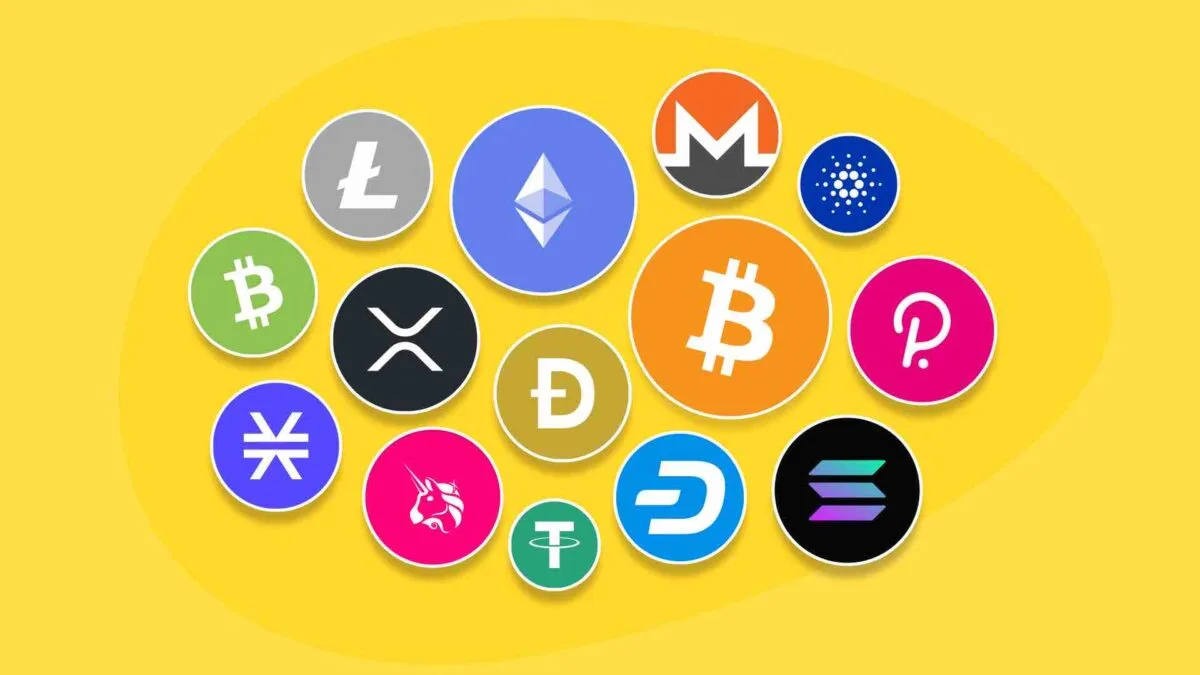

If you’ve been anywhere near crypto Twitter or a trading app lately, you’ve probably seen the same question pop up again and again: which new layer 1 crypto coins to buy now actually have real potential? It’s a fair question — and a hard one to answer, because the layer 1 (L1) space has exploded with new entrants, each promising faster speeds, lower fees, or a smarter way to handle smart contracts.
We’ll cover what a layer 1 blockchain actually is, why new L1 projects keep launching, what separates a promising chain from a forgettable one, and the framework serious investors use before putting money into any new layer 1 crypto coin. Whether you’re a long-time holder rotating your portfolio or someone just starting to explore blockchain investing, this article is built to help you evaluate — not just chase — the next wave of layer 1 tokens.
One quick note before we dive in: nothing here is financial advice. Crypto markets are volatile, and new L1 tokens in particular carry higher risk than established chains like Bitcoin or Ethereum. Always do your own research (often shortened to “DYOR” in crypto communities) before investing.
What Is a Layer 1 Blockchain, Exactly?
A layer 1 blockchain is the base network — the foundational protocol that everything else in an ecosystem is built on top of. Bitcoin and Ethereum are the two best-known examples. They handle their own consensus, security, and transaction validation without relying on another chain underneath them.
Layer 2 (L2) solutions, by contrast, are built on top of an L1 to add speed or reduce fees — think Arbitrum or Optimism sitting on Ethereum. When people search for new layer 1 crypto coins to buy now, they’re usually looking for base-layer chains, not the scaling solutions built over them.
Why New Layer 1 Chains Keep Launching
Older L1s like Ethereum revolutionized smart contracts, but they also exposed real limitations: network congestion, unpredictable gas fees, and scalability ceilings. Newer L1 projects exist largely to solve these pain points, and most fall into one of a few categories:
- High-throughput chains built for speed and low fees, often using parallel transaction processing instead of processing everything one at a time.
- App-specific or purpose-built chains designed around a single use case, like decentralized trading or stablecoin settlement.
- Privacy-focused L1s that bake in confidentiality at the protocol level rather than bolting it on later.
- Interoperability-first chains built to make moving assets between blockchains simpler and more secure.
Recent industry outlooks note that the L1 landscape has become increasingly specialized — rather than one chain trying to do everything, newer networks are carving out specific niches like stablecoin settlement, privacy, or high-frequency trading infrastructure.
New Layer 1 Crypto Coins to Buy Now: What to Actually Look For
This is the part most listicles skip. Before you even think about which new layer 1 crypto coins to buy now, you need a framework for separating genuine innovation from recycled marketing. Here’s what actually matters.
1. Real Developer Activity
A chain with an active GitHub, regular protocol upgrades, and a growing number of deployed applications is a very different bet than a chain that’s mostly a whitepaper and a Telegram group. Developer activity is one of the clearest signals of long-term viability.
2. Genuine Technical Differentiation
Ask what problem this chain actually solves that existing L1s don’t. Faster block times alone aren’t enough anymore — dozens of chains claim that. Look for a specific, defensible edge: a novel consensus mechanism, a unique execution model (like parallelized transaction processing), or a clear target market (gaming, DeFi, real-world asset tokenization, etc.).
3. Token Utility and Distribution
Does the token actually do something within the network — pay for gas, secure the chain through staking, enable governance — or is it mostly speculative? Also check how concentrated the token supply is. Heavy insider or venture-capital allocations can create sell pressure once lockups expire.
4. Ecosystem and Liquidity
A new L1 without exchange listings, liquidity, or a growing app ecosystem is much harder to exit if things go sideways. Look at total value locked (TVL), active wallet growth, and whether major DeFi protocols or stablecoins are building on the chain.
5. Team and Funding Transparency
Reputable backers and a public, accountable team aren’t guarantees of success, but anonymous teams with vague roadmaps are a common warning sign in the L1 space specifically, since launching a chain requires significant technical credibility.
Categories of New Layer 1 Crypto Coins to Watch in 2026
Rather than naming a “top 10” that will be outdated in a month, it’s more useful to understand the categories where genuine innovation is happening right now. This gives you a durable framework for evaluating new layer 1 crypto coins to buy now, even as specific projects rise and fall.
High-Performance, Parallel-Execution Chains
A newer generation of L1s processes multiple non-conflicting transactions simultaneously instead of one at a time, which can dramatically increase throughput. This “object-centric” or parallelized approach has become one of the more talked-about architectural shifts in layer 1 design over the past couple of years, particularly among chains built by teams with backgrounds in large-scale distributed systems.
Stablecoin-Native and “Stablechain” Networks
As stablecoins have become one of crypto’s clearest product-market fits, a new category of L1 has emerged that’s purpose-built around stablecoin issuance, settlement, and low, predictable transaction costs. These chains are worth watching if you’re interested in real-world payment use cases rather than pure speculation.
Privacy-First Layer 1s
Some newer entrants are building privacy into the base protocol itself — using techniques like zero-knowledge proofs — rather than treating it as an optional add-on. This is a smaller but growing niche as regulatory and enterprise interest in confidential transactions increases.
Trading and DeFi-Optimized Chains
A handful of newer L1s are designed almost entirely around high-frequency, low-latency financial applications — decentralized derivatives, order-book-style trading, and similar use cases that older, more general-purpose chains historically struggled to support well.
Interoperability and App-Chain Coordination Networks
As the base layer fragments into more specialized chains, cross-chain communication becomes more important.
How to Evaluate a New Layer 1 Coin Before You Buy
If you’ve found a project that fits into one of the categories above and looks genuinely interesting, run it through this quick checklist before committing capital.
Check the Fundamentals First
- Check tokenomics: total supply, circulating supply, and unlock schedule.
- Look at the chain’s current TVL and how it’s trended over the last few months
Check Community and Sentiment — Carefully
Community size and hype can be misleading, since they’re easy to manufacture. Weigh genuine developer and builder activity more heavily than social media follower counts or influencer promotion.
Position Sizing and Risk Management
Even a technically strong new L1 is a higher-risk position than an established chain. Many experienced investors treat new layer 1 tokens as a small, clearly bounded portion of a broader portfolio rather than a core holding — and only allocate capital they can afford to lose entirely.
Layer 1 vs. Layer 2: Don’t Confuse the Two When Searching
A quick but important clarification, since this trips up a lot of newer investors: not every “new blockchain” you hear about is a layer 1. Many popular projects are actually layer 2 scaling solutions that run on top of an existing L1 like Ethereum. If a project’s core pitch is “cheaper, faster transactions on top of [existing chain],” it’s likely an L2, not a new base-layer L1. This matters because L1s and L2s carry different risk profiles, different technical assumptions, and different long-term value propositions.
Common Mistakes Investors Make With New L1 Tokens
- Chasing hype without checking fundamentals. A trending token isn’t the same as a technically sound one.
- Ignoring unlock schedules. A great-looking chart can reverse quickly when a large token unlock hits the market.
- Overconcentrating in one new chain. Diversifying across a few well-researched positions reduces the impact if any single project underperforms.
- Skipping security research. New chains are more likely to have undiscovered smart contract or bridge vulnerabilities than mature, heavily audited networks.
Final Thoughts: Research Before You Buy
The layer 1 landscape isn’t slowing down — if anything, it’s becoming more specialized, with new chains carving out niches in stablecoin settlement, privacy, high-performance trading, and cross-chain interoperability. That’s genuinely exciting for the space, but it also means the number of options facing anyone searching for new layer 1 crypto coins to buy now has never been higher.
The projects that tend to hold up over time share a few things in common: real developer activity, clear technical differentiation, transparent tokenomics, and a growing ecosystem of actual users and applications — not just hype cycles. Use the framework in this guide, apply it consistently, and treat every new layer 1 crypto coin as its own research project rather than a tip to follow blindly.
Ready to go deeper? Start by shortlisting two or three new layer 1 crypto coins to buy now that fit the categories covered above, then run each one through the evaluation checklist in this guide before making any decision.