
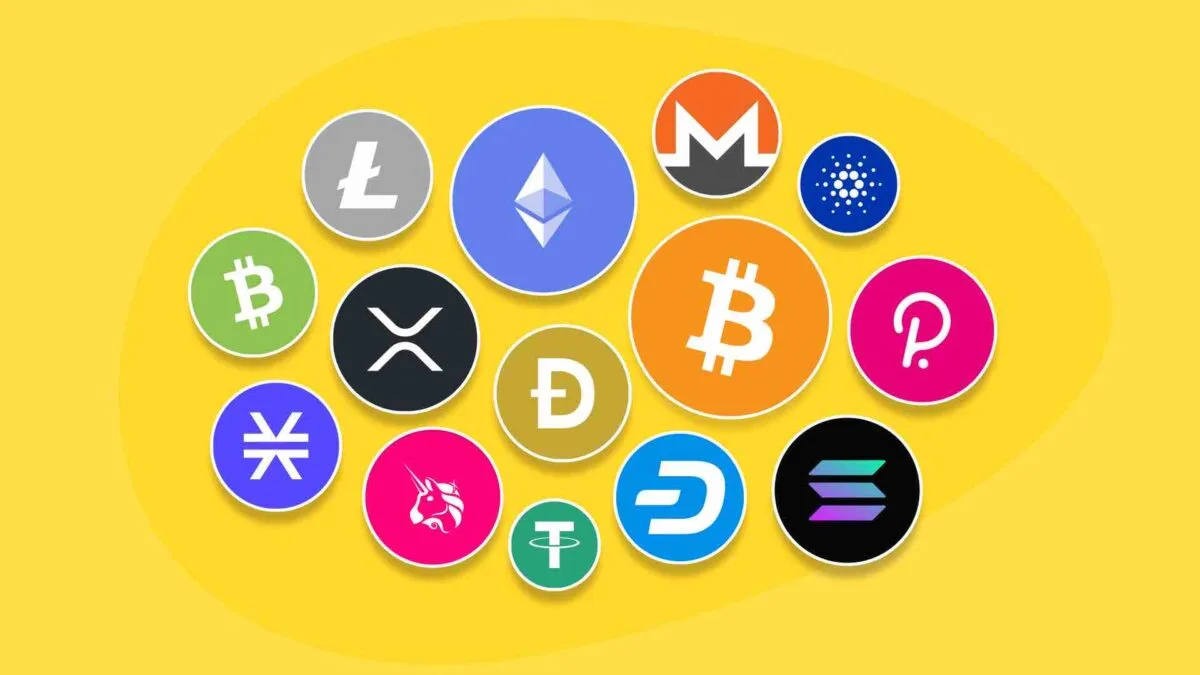
If you’ve spent any time researching blockchain investing, you’ve probably run into the term “layer 1” more than once. It gets thrown around constantly, but few articles actually rank these networks the way investors want: by size. This guide breaks down the top layer 1 cryptocurrencies by market cap, explains what separates the leaders from the rest, and gives you a clear picture of where the biggest blockchain networks stand today.
Layer 1 blockchains are the foundational networks — think Bitcoin, Ethereum, and Solana — that process and finalize transactions directly on their own chain, without relying on another network for security. Every wallet transfer, smart contract call, and token swap on these chains gets settled on the base layer itself. That’s a big deal, because it’s what gives these networks their trust, decentralization, and — ultimately — their valuation.
Whether you’re a trader scouting opportunities, a developer picking where to build, or just crypto-curious, understanding the top layer 1 cryptocurrencies by market cap gives you a real sense of which networks the market currently trusts the most. Let’s dig into the full ranking.
What Does “Layer 1” Actually Mean?
Before jumping into the rankings, it helps to understand what qualifies as a layer 1 network in the first place.
A layer 1 blockchain is a base-level network with its own consensus mechanism (like proof-of-work or proof-of-stake), its own validators or miners, and its own native token used to pay transaction fees. Nothing sits “underneath” it. Compare that to a layer 2 solution — like Arbitrum or Optimism — which is built on top of a layer 1 network (usually Ethereum) to help it process transactions faster and cheaper.
This distinction matters for market cap rankings because layer 1 networks tend to capture more long-term value. They own the security, the settlement, and the trust layer that everything else depends on.
Why Market Cap Is the Metric That Matters Most
Market capitalization — the total value of all coins in circulation — is the standard way to measure a cryptocurrency’s size and relative dominance. It’s calculated by multiplying the circulating supply of a token by its current price.
For layer 1 networks specifically, market cap tends to reflect a mix of:
- Network security and decentralization
- Developer activity and ecosystem growth
- Real-world usage (DeFi, stablecoins, NFTs, gaming)
- Investor and institutional confidence
A high market cap doesn’t automatically mean a “better” blockchain from a technical standpoint, but it does signal which networks the market has put the most trust — and capital — behind.
Top Layer 1 Cryptocurrencies by Market Cap
Here’s how the leading layer 1 blockchains currently stack up. Keep in mind that crypto prices are highly volatile, so exact figures shift daily — always check a live source like CoinMarketCap or CoinGecko before making decisions.
1. Bitcoin (BTC)
Bitcoin remains the largest layer 1 cryptocurrency by market cap by a wide margin, historically sitting in the multi-trillion-dollar range depending on market conditions. It uses proof-of-work consensus and a hard-capped supply of 21 million coins, which has cemented its reputation as “digital gold.” While Bitcoin wasn’t originally built for smart contracts, ongoing upgrades and layer 2 integrations (like the Lightning Network) are expanding what’s possible on top of it.
2. Ethereum (ETH)
Ethereum is the second-largest layer 1 network and, by most measures, the most active. It pioneered smart contracts and remains the top choice for decentralized finance (DeFi), NFTs, and tokenized assets. Since transitioning to proof-of-stake, Ethereum has focused heavily on scalability upgrades, while still hosting the largest ecosystem of layer 2 networks built on top of it.
3. BNB Chain (BNB)
BNB Chain, closely tied to the Binance best exchange, consistently ranks among the top layer 1 blockchains by market cap. It’s known for low fees and high throughput, making it popular for retail trading, DeFi applications, and token launches — though it trades some decentralization for speed.
4. Solana (SOL)
Solana has built a reputation as one of the fastest layer 1 blockchains, capable of processing thousands of transactions per second. It’s become a hub for meme coins, consumer apps, and increasingly, stablecoin activity. Despite past network outages, Solana’s ecosystem growth has kept it firmly in the top tier by market cap.
5. Cardano (ADA)
Cardano takes a research-first, peer-reviewed approach to blockchain development, prioritizing security and formal verification over rapid iteration. It has a large, loyal holder base, which keeps it consistently ranked among the biggest layer 1 blockchains, even though its DeFi ecosystem has grown more slowly than some competitors.
6. Avalanche (AVAX)
Avalanche stands out for its subnet architecture, which lets developers launch custom, application-specific blockchains that still settle back to the main network. This flexibility has made it attractive to enterprises, gaming projects, and real-world asset tokenization efforts.
7. TRON (TRX)
TRON has quietly become one of the dominant networks for stablecoin transfers, particularly USDT. Its low fees and high transaction speed have made it a go-to layer 1 for payments and remittances, especially in emerging markets.
8. Toncoin (TON)
Backed by its integration with the Telegram messaging app, Toncoin has seen rapid ecosystem growth, particularly around consumer-facing apps and mini-games. Its built-in distribution through Telegram gives it a user acquisition advantage most other layer 1 networks don’t have.
9. Polkadot (DOT)
Polkadot takes a different architectural approach, functioning as a “blockchain of blockchains.” Its Relay Chain coordinates a network of specialized parachains, aiming to solve interoperability problems that plague isolated layer 1 networks.
10. Sui (SUI)
A newer entrant, Sui uses an object-centric data model and the Move programming language to enable parallel transaction execution. It’s been gaining traction for consumer-scale applications that need low latency and high throughput.
How the Rankings Shift Over Time
It’s worth noting that this list isn’t static. The top layer 1 cryptocurrencies by market cap can reshuffle significantly within months based on:
- Market cycles: Bull markets tend to favor higher-risk, higher-growth layer 1s, while bear markets often consolidate value back into Bitcoin and Ethereum.
- Regulatory developments: Legal clarity (or crackdowns) in major markets can shift capital between networks almost overnight.
- Technological upgrades: Major upgrades — like Ethereum’s move to proof-of-stake — can significantly change investor sentiment.
- Stablecoin and institutional flows: Networks that capture more stablecoin volume or institutional custody deals often see outsized market cap growth.
Layer 1 vs. Layer 2: Why It Affects the Rankings
A common point of confusion is how layer 2 tokens (like Arbitrum’s ARB or Optimism’s OP) factor into this list — they don’t, at least not directly. Layer 2 networks inherit their security from an underlying layer 1 (usually Ethereum), so their tokens are typically valued and ranked separately, even though their activity can boost the layer 1 network they settle on.
This is actually one reason Ethereum’s ecosystem value is often understated by its market cap alone — a huge amount of economic activity happens on layer 2s that ultimately settle back to Ethereum’s base layer.
How to Evaluate Layer 1 Blockchains Beyond Market Cap
Market cap is a useful starting point, but it shouldn’t be the only factor you weigh. When comparing layer 1 networks, also consider:
- Total Value Locked (TVL): How much capital is actively deployed in DeFi protocols on the network.
- Transaction throughput and fees: Can the network handle demand without costs spiking?
- Developer activity: Active GitHub commits and new project launches signal long-term health.
- Decentralization: How distributed are the validators or miners securing the network?
- Real-world adoption: Stablecoin volume, payment use cases, and institutional partnerships.
Combining these metrics with market cap gives a far more complete picture than ranking alone.
Final Thoughts
The top layer 1 cryptocurrencies by market cap — Bitcoin, Ethereum, BNB Chain, Solana, and the rest of this list — represent the backbone of the entire crypto ecosystem. They’re the networks that everything else, from DeFi protocols to NFT marketplaces to layer 2 scaling solutions, ultimately depends on.
If you’re exploring where to invest, build, or simply learn more, start with these leaders, but don’t stop at market cap alone — dig into each network’s technology, ecosystem, and long-term roadmap. If you found this ranking useful, check out our guide comparing layer 1 vs layer 2 blockchains to better understand how these two categories work together, and keep this page bookmarked to track how the top layer 1 cryptocurrencies by market cap shift as the market evolves.