If you’ve spent any time in crypto, you’ve probably run into the same two complaints over and over: transactions are too slow, and gas fees are too high. That’s exactly the problem crypto Layer 2 solutions were built to solve. Whether you’re trying to swap tokens on Ethereum without paying $40 in fees, or you’re just curious what “L2” means every time it pops up on Twitter, this guide will walk you through everything you need to know.
By the end of this article, you’ll understand what crypto Layer 2 solutions actually are, how they work under the hood, the different types you’ll encounter, the most popular networks in 2026, and how to start using them safely. No prior technical background required — we’ll keep things practical and beginner-friendly the whole way through.
Let’s start with the basics.
What Are Crypto Layer 2 Solutions?

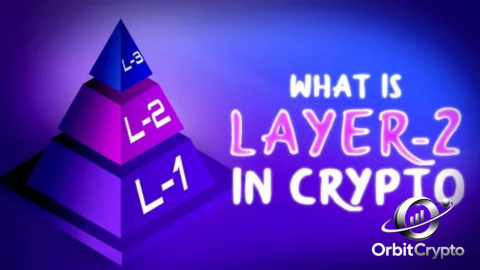
Crypto Layer 2 solutions are secondary frameworks or protocols built on top of an existing blockchain, known as Layer 1 (like Ethereum or Bitcoin). Their job is simple: handle transactions faster and cheaper, while still relying on the security of the main chain underneath.
Think of Layer 1 as a busy highway during rush hour. Every car (transaction) has to squeeze through the same lanes, and when traffic builds up, tolls (gas fees) go up too. A Layer 2 solution is like building an express lane above that highway — cars can travel quickly and cheaply, then merge back onto the main road when needed.
This is why Layer 2 networks have become essential infrastructure. Ethereum, for instance, can only process around 15–30 transactions per second on its base layer. That’s nowhere near enough for global adoption. Layer 2 networks push that number into the thousands, without weakening the underlying security guarantees of Ethereum itself.
Why Layer 2 Exists: The Blockchain Trilemma
Most blockchains struggle to balance three things at once: security, decentralization, and scalability. This is often called the “blockchain trilemma.” Layer 1 networks typically prioritize security and decentralization, which leaves scalability as the weak point.
Rather than compromising Layer 1’s security by changing its core rules, developers realized they could build additional layers on top that inherit that security while solving the speed problem separately. That’s the entire philosophy behind Layer 2 scaling.
How Do Crypto Layer 2 Solutions Work?
At a high level, Layer 2 networks move the heavy lifting of transaction processing off the main chain, then periodically report a summary of that activity back to Layer 1. This process keeps the base layer secure while dramatically reducing congestion.
Here’s a simplified breakdown of the general process:
- A user initiates a transaction on the Layer 2 network.
- The Layer 2 network batches this transaction together with many others.
- The batch is processed off-chain (or in a separate execution environment).
- A compressed proof or summary of these transactions is submitted back to the Layer 1 blockchain.
- Layer 1 verifies the data and finalizes it, inheriting the base chain’s security.
Because thousands of transactions can be bundled into a single Layer 1 submission, costs are split across all users — which is exactly why fees on Layer 2 networks are often a fraction of what you’d pay directly on Layer 1.
Types of Crypto Layer 2 Solutions
Not all Layer 2 networks work the same way.
Rollups
Rollups are currently the most popular type of Layer 2 solution, especially in the Ethereum ecosystem. They execute transactions off-chain and then “roll up” the data into a single batch that’s posted to Layer 1. There are two major flavors:
- Optimistic Rollups assume transactions are valid by default and only run a check if someone disputes them (via a “fraud proof”). Examples include Arbitrum and Optimism.
- Zero-Knowledge (ZK) Rollups use cryptographic proofs to verify transactions are valid before they’re even submitted, offering faster finality. Examples include zkSync and Starknet.
Sidechains
Sidechains are independent blockchains that run parallel to a main chain and connect to it through a bridge. They have their own consensus mechanisms and validators, which makes them fast but slightly less secure than rollups, since they don’t inherit Layer 1 security directly. Polygon’s original PoS chain is a well-known example.
State Channels
State channels allow two or more parties to transact off-chain repeatedly and only settle the final result on the main blockchain. This works well for specific use cases like micropayments or gaming, where speed matters more than broad interoperability. The Bitcoin Lightning Network is the most recognizable example of this model.
Plasma Chains
Plasma was one of the earlier scaling proposals, using child chains that periodically commit data back to the main chain. While largely overshadowed by rollups today, it laid important groundwork for how modern Layer 2 architecture developed.
Popular Crypto Layer 2 Networks in 2026
If you’re ready to actually use a Layer 2 network, here are some of the most established options:
- Arbitrum — One of the largest Optimistic Rollups by total value locked, known for strong developer adoption and a mature DeFi ecosystem.
- Optimism — Another leading Optimistic Rollup, notable for its “OP Stack” framework that other chains build on top of.
- Base — A Layer 2 network built using the OP Stack, backed by Coinbase, focused on ease of use for newer crypto users.
- zkSync Era — A ZK-Rollup emphasizing fast finality and low fees through zero-knowledge proofs.
- Polygon — Offers multiple scaling products, including zkEVM rollups and its original sidechain, widely used for payments and gaming.
- Starknet — A ZK-Rollup using its own programming language, Cairo, popular for complex smart contract applications.
Each network has trade-offs in speed, fees, decentralization, and app ecosystem, so it’s worth exploring a couple before settling on one for regular use.
Benefits of Using Layer 2 Crypto Solutions
Understanding the benefits helps explain why Layer 2 adoption has grown so quickly.
Lower Transaction Fees
This is the most obvious benefit. Instead of paying high gas costs for every swap, mint, or transfer, users on Layer 2 networks often pay a fraction of a cent to a few dollars, depending on network congestion.
Faster Transaction Speeds
Layer 2 networks can confirm transactions in seconds rather than minutes, making them far more practical for everyday use, gaming, and real-time applications.
Inherited Security
Unlike building an entirely separate blockchain from scratch, most modern Layer 2 solutions — especially rollups — inherit security guarantees from the underlying Layer 1 chain, which reduces trust assumptions compared to fully independent networks.
Better User Experience
Lower fees and faster speeds combine to make decentralized apps genuinely usable, which matters a lot if crypto is ever going to reach mainstream adoption.
Risks and Limitations to Understand
No solution is perfect, and it’s worth going in with realistic expectations.
- Bridge risk: Moving assets between Layer 1 and Layer 2 typically requires a bridge, and bridges have historically been common targets for exploits.
- Withdrawal delays: Optimistic Rollups often have a challenge period (sometimes up to seven days) before you can withdraw funds back to Layer 1.
- Centralization concerns: Some Layer 2 networks currently rely on a small number of sequencers or validators, which is a trade-off many are actively working to decentralize further.
- Choose a wallet that supports multiple networks, such as MetaMask or a similar Web3 wallet.
- Bridge your funds from Layer 1 to your chosen Layer 2 network using an official bridge or a trusted third-party aggregator.
- Start transacting — swap tokens, mint NFTs, or interact with dApps at a fraction of the cost.
Before bridging any significant funds, it’s worth spending time understanding gas costs on the base layer so you know exactly what you’re saving. If your site already covers this, linking out with anchor text like “Learn how Ethereum gas fees work” is a natural way to connect the two topics for readers who want more depth.
For readers who want a technical deep dive straight from the source, the Ethereum Foundation’s official Layer 2 page is a solid, authoritative reference.
The Future of Layer 2 Crypto Scaling
Layer 2 development isn’t slowing down.Improvements like proto-danksharding and full danksharding aim to make posting data to Layer 1 even cheaper, which in turn lowers costs further for every rollup built on top of it.
At the same time, interoperability between different Layer 2 networks is becoming a bigger focus, with new bridging standards and shared sequencing layers aiming to make the multi-chain experience feel more seamless for everyday users.
Conclusion
Crypto Layer 2 solutions have quickly become one of the most important developments in blockchain technology, solving real problems around speed, cost, and scalability without sacrificing the security that makes crypto trustworthy in the first place. Whether you’re minting NFTs, trading tokens, or just exploring DeFi for the first time, understanding how crypto Layer 2 solutions work puts you in a much better position to navigate the space confidently.
Ready to put this knowledge into action? Bridge a small amount of funds to a network like Arbitrum or Base today, explore a few apps, and experience firsthand why crypto Layer 2 solutions are reshaping how people use blockchain technology